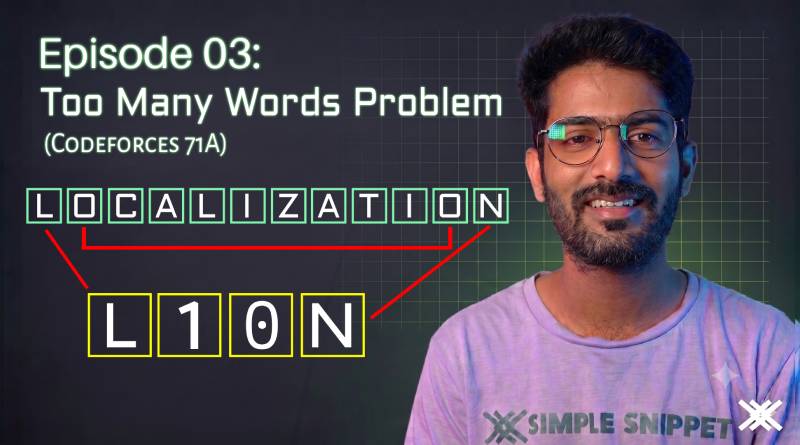
Codeforces 71A: Way Too Long Words Solution & Explanation (C++)

Welcome to Episode 3 of our 50-Day Competitive Programming Challenge! After tackling basic math conditions in our last problem, we are stepping into a very crucial topic for coding interviews and placement drives: String Manipulation. Today, we are solving Way Too Long Words (Codeforces 71A). Have you ever noticed how developers sometimes write “localization” as … Read more

Codeforces 4A: Watermelon Problem Solution & Explanation (C++)

Introduction Welcome to the very first problem of our 50-Day Competitive Programming Challenge! If you are just starting your journey into competitive programming, the Watermelon problem (Codeforces 4A) is universally considered the best place to begin. At first glance, this problem seems extremely simple, but it teaches a fundamental lesson that every programmer needs to … Read more

C++ Multidimensional Arrays – 2D Arrays (With Examples)

2d arrays in c++ programming

Introduction In this tutorial, we will learn about multidimensional arrays in C++, with a focus on 2D arrays (two-dimensional arrays). A multidimensional array is essentially an array of arrays. Among them, 2D arrays are the simplest and most commonly used. They are often used to represent data in a tabular format (rows and columns) — … Read more

C++ Arrays – Definition, Syntax, Initialization, and Examples

arrays in cpp programming

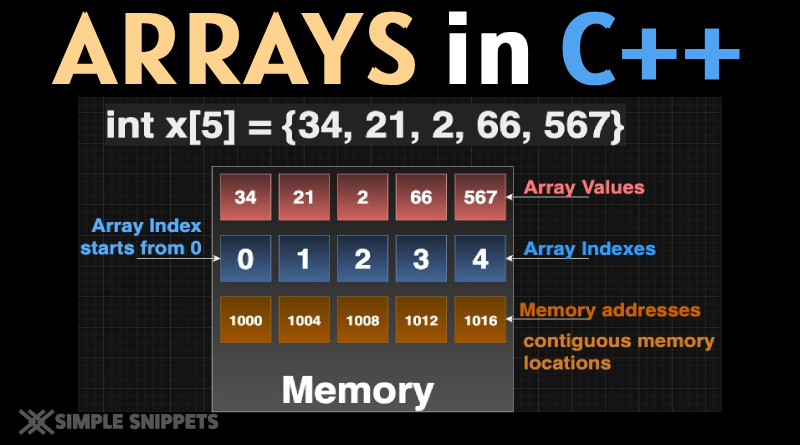
Introduction to Arrays in C++ In C++ programming, an array is a collection of elements of the same data type, stored in contiguous memory locations. Each element can be accessed using an index. 👉 Example:Instead of creating 100 different variables to store the ages of 100 people, you can create a single integer array of … Read more

C++ Do While Loop Control Structure

dowhile loop in programming

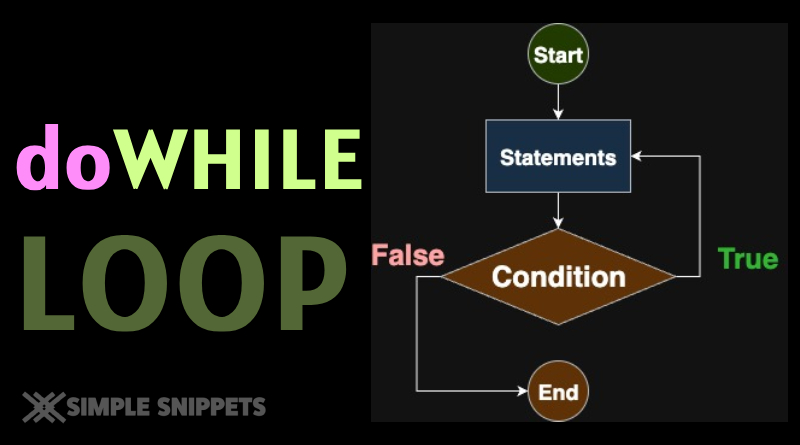
Introduction The do-while loop in C++ is similar to the while loop, but with one key difference:👉 The loop body executes at least once, even if the condition is false initially. That’s why it’s called an exit-controlled loop. Syntax Working of Do-While Loop Example: Menu-driven program using Do-While Key Points Differences Between While and Do-While … Read more

C++ While Loop Control Structure

while loop in cpp

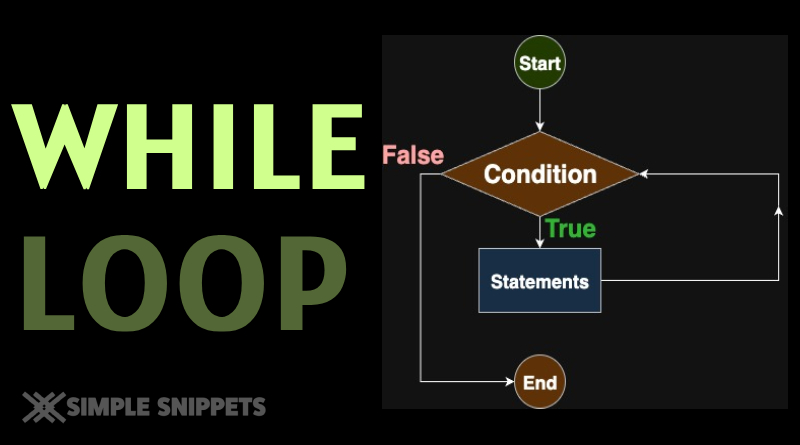
Introduction The while loop in C++ is used when the number of iterations is not known in advance. It keeps executing a block of code as long as the given condition is true. This makes it ideal for cases where you want to loop until a specific event occurs (like user input, reaching a target, … Read more

C++ For Loop Control Structure

for loop in c++ programming

Introduction In programming, loops let you repeat tasks efficiently. In C++, the for loop is used when you know in advance how many times you want the loop to run (or can express it numerically). This makes for loops ideal for fixed-count iterations, arrays, traversals, and more. Syntax of the For Loop in C++ Working … Read more

C++ Switch Case Control Structure

switch case statements in c++ programming

Introduction In this tutorial, we will learn about the switch case control structure in C++. A switch statement allows a variable to be tested against multiple constant values. Each value is called a case, and the variable being checked is compared to each case until a match is found. Switch case is often used as … Read more

C++ If-Else-ElseIf Control Structure

if elseif else control statements

In this tutorial, we’ll learn how the if, if-else, and if-else-if control structures work in C++. These are essential tools for decision making in any program. 1. The if Structure The if control structure executes a block of code only when a specific condition is true. If the condition is false, the block is skipped entirely. It’s optional to … Read more

C++ Control Structures | Conditional & Loops

Control statements in C++

Introduction In C++, control structures are building blocks that control the flow of execution of a program. They allow programmers to make decisions and repeat certain parts of code based on conditions. Broadly, control structures are divided into two categories: 1. Conditional Statements These structures help the program take decisions. (a) if statement Executes a … Read more