C++ Control Structures | Conditional & Loops
Introduction
In C++, control structures are building blocks that control the flow of execution of a program. They allow programmers to make decisions and repeat certain parts of code based on conditions.
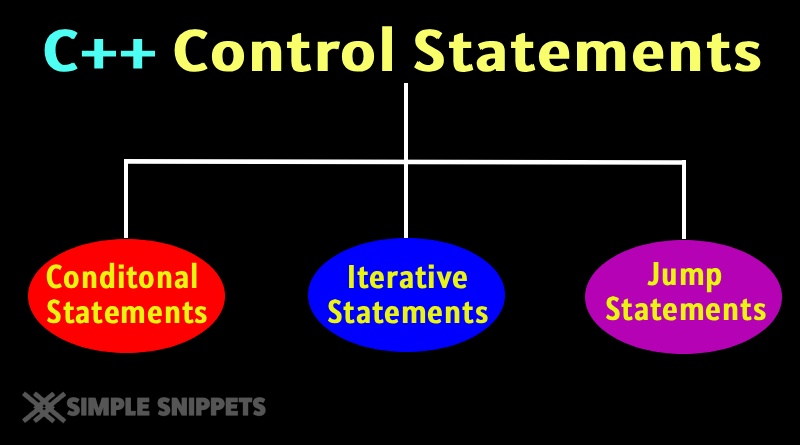
Broadly, control structures are divided into two categories:
- Conditional / Decision-making statements → Execute code based on conditions.
- Looping statements → Repeat a block of code multiple times.
1. Conditional Statements
These structures help the program take decisions.
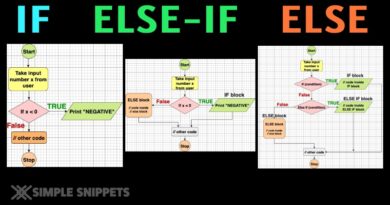
(a) if statement
Executes a block of code only if the condition is true.
#include <iostream>
using namespace std;

int main() {
    int age = 20;
    if(age >= 18) {
        cout << "You are eligible to vote.";
    }
    return 0;
}(b) if-else statement
Provides two alternative paths.
int marks = 45;
if(marks >= 40) {
    cout << "Pass";
} else {
    cout << "Fail";
}(c) if-else-if ladder
Checks multiple conditions one after another.
int marks = 85;
if(marks >= 90) {
    cout << "Grade A";
} else if(marks >= 75) {
    cout << "Grade B";
} else if(marks >= 40) {
    cout << "Grade C";
} else {
    cout << "Fail";
}(d) switch statement
Used when multiple choices depend on the value of a single variable.
int day = 3;
switch(day) {
    case 1: cout << "Monday"; break;
    case 2: cout << "Tuesday"; break;
    case 3: cout << "Wednesday"; break;
    default: cout << "Invalid day";
}2. Looping Statements
These help execute a block of code repeatedly.
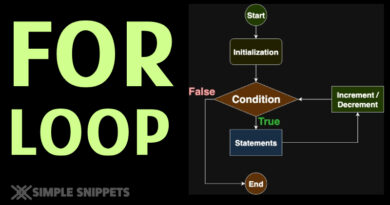
(a) for loop
Used when the number of iterations is known.
for(int i = 1; i <= 5; i++) {
    cout << "Hello World " << i << endl;
}(b) while loop
Executes as long as the condition is true.
int i = 1;
while(i <= 5) {
    cout << i << " ";
    i++;
}(c) do-while loop
Executes at least once, even if the condition is false.
int i = 1;
do {
    cout << i << " ";
    i++;
} while(i <= 5);3. Jump Statements in C
Jump statements are used to change the flow of control unconditionally in a program. They allow you to break out of loops, skip iterations, return from functions, or jump to specific points in the code.
3.1 break
The break statement is used to terminate a loop or a switch statement immediately.
Once break is executed, control jumps to the first statement after the loop or switch.
Example:
#include <stdio.h><br>int main() {<br> for (int i = 1; i <= 5; i++) {<br> if (i == 3) {<br> break; // exits the loop when i == 3<br> }<br> printf("%d ", i);<br> }<br> return 0;<br>}<br>Output:
1 23.2 continue
The continue statement skips the current iteration of the loop and jumps to the next iteration.
Example:
#include <stdio.h>
int main() {
    for (int i = 1; i <= 5; i++) {
        if (i == 3) {
            continue;  // skips printing 3
        }
        printf("%d ", i);
    }
    return 0;
}Output:
1 2 4 5
3.3 goto
The goto statement allows unconditional jump to a labeled statement in the same function.
👉 It’s generally discouraged because it can make code harder to read and maintain.
Example:
#include <iostream.h>
int main() {
    int i = 1;
start:
    if (i <= 3) {
        printf("%d ", i);
        i++;
        goto start;  // jumps back to 'start' label
    }
    return 0;
}Output:
1 2 33.4 return
The return statement is used to exit from a function. It can optionally return a value to the calling function.
Example:
#include <stdio.h>
int add(int a, int b) {
    return a + b;  // exits function and sends value back
}

int main() {
    int sum = add(5, 3);
    printf("Sum = %d", sum);
    return 0;  // exits main function
}Output:
Sum = 8Summary
- Conditional statements:
if,if-else,if-else-if,switch. - Loops:
for,while,do-while. - Jump Statements:
break,continue,go-to, return. - These structures make programs dynamic, efficient, and logical.